
On June 10, 2026, the government reported that consumer prices had risen 4.2% over the previous 12 months, the fastest pace since April 2023. Gold fell more than 4% that day. By the next morning it had erased all of its gains for the year.
For anyone who owns gold as an inflation hedge, that sequence looks backward. But it follows a familiar pattern. The inflation rate in the headlines compares today’s prices with prices a year ago, so it describes the past. Market prices are based on future expectations. By the time a headline confirms high inflation, the trade has usually already happened. An investor who hedges at that point buys after the move is over.
Gold in 2026 shows this pattern clearly, and the lesson applies to inflation hedges in any cycle. This article explains why, examines earlier cycles, and covers what to ask before buying gold to hedge inflation.
Why headline inflation looks backward
The inflation figure that leads the news is the 12-month change in the Consumer Price Index. It compares this month’s prices with the same month a year earlier, and each report arrives about two weeks after the month it covers.
June 2026 shows how far apart the two views can drift. Consumer prices fell 0.4% that month, the largest monthly drop since April 2020. The 12-month rate still read 3.5%. A reader who saw 3.5% could conclude that inflation remained a serious problem. A reader who saw the monthly decline could tell that energy prices had already turned.
Markets watch the monthly data for oil and bond prices, and make their own forecasts. They reach a conclusion well before the 12-month figure is released.
Why markets move before inflation reports
The war with Iran began on February 28, 2026. Brent crude jumped 9% in early trading the following Monday. Traders could see higher gasoline prices coming long before those prices entered a 12-month average. The peak reading of 4.2% arrived more than three months later.
Gold responds to expectations for interest rates and the dollar. It pays no interest or dividends, so higher rates raise the opportunity cost of holding it. When oil surged, markets began to expect that the Federal Reserve would hold rates high and possibly raise them. By March 20, three weeks into the war, the latest report still put inflation at 2.4%. Financial coverage that day already traced gold’s decline to rising inflation-adjusted interest rates. Ewa Manthey, a commodities strategist at ING, described the chain on June 10. Rising oil was “reinforcing expectations that central banks stay tighter for longer,” she told CNBC, which pushed real yields higher. She called that “a clear headwind for non-yielding assets like gold and silver.” Real yields measure what bonds pay after expected inflation.
How gold moved through 2026
Gold’s big move came first. The metal gained 64% in 2025, its best year since 1979. Much of that buying reflected fears that deficits and debt would erode the dollar’s purchasing power, a theme known as the debasement trade. Meanwhile, reported inflation never rose above 3.0% in 2025.
Gold set its record of $5,589 an ounce on January 28, 2026. Two days later, the nomination of Kevin Warsh to lead the Fed eased worries about the central bank’s independence and sent the dollar higher. Gold fell about 9% in one session. It turned lower again in March as higher oil prices lifted rate expectations.
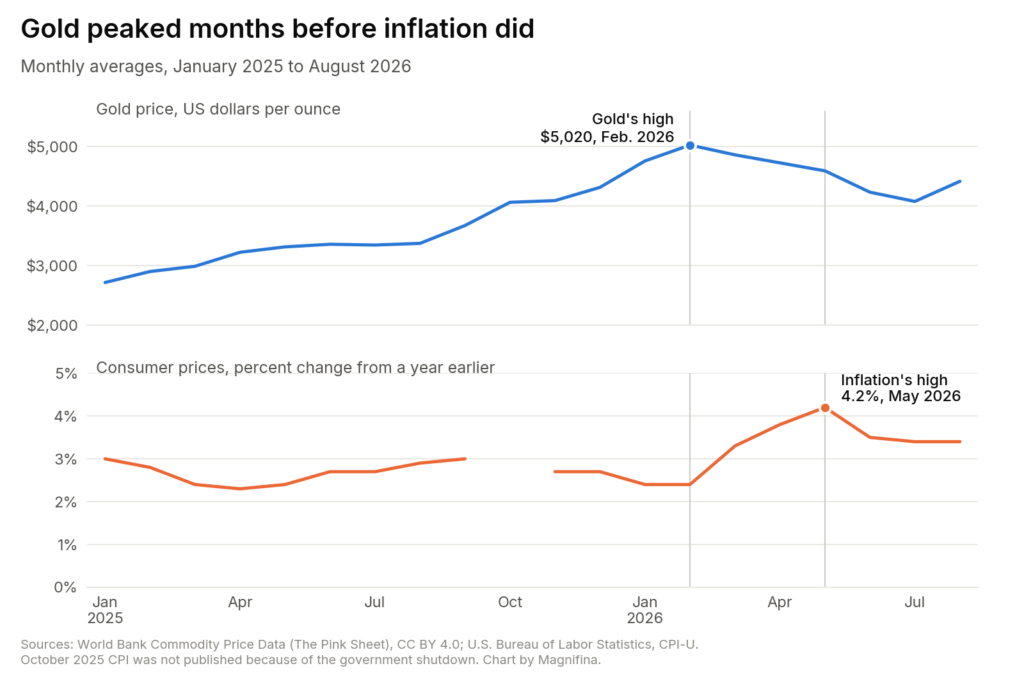
Sources: World Bank Commodity Price Data (CC BY 4.0) and the U.S. Bureau of Labor Statistics.
Measured by monthly averages, gold peaked in February and inflation peaked in May. The government reported the May figure on June 10, and gold kept sliding to about $3,975 on July 16, after the first cooler report had already arrived. Rates were not the only force. Profit-taking and a stronger dollar weighed on gold as well. From its July low, gold climbed about 17% by late August as the debasement trade returned. It slipped again as markets priced in the Fed’s first rate increase since July 2023, which came on September 16.
In late September, gold traded near $4,200. Even though that is roughly 25% below its record, it’s still higher than a year earlier. Anyone who owned gold before 2025 remains well ahead. Buyers who arrived with the headlines have fared worse.
Poor advice from the headlines
Some personal finance coverage steered readers toward gold at exactly those moments. On April 10, the day the report showed inflation jumping from 2.4% to 3.3%, CBS News published “Inflation just spiked. Here are 3 reasons why a gold investment makes sense right now.” Gold closed that day at $4,749. By late September, it was down more than 10%.
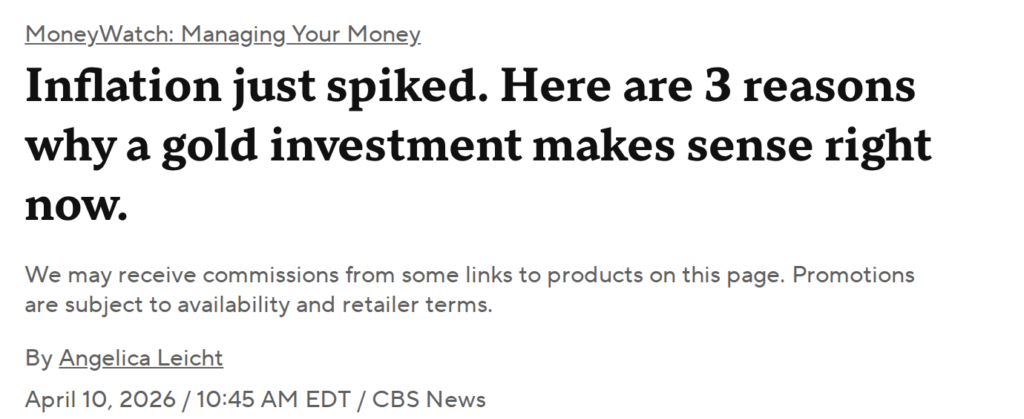
CBS News, April 10, 2026.
The peak reading drew the same response. A week after the 4.2% report, CBS News ran “Here’s why a gold investment makes sense right now,” calling inflation at its highest level since April 2023 “the precise economic climate” for adding an inflation hedge. The same day, June 17, Yahoo Finance published “Should I invest in gold in 2026?”, which cited inflation concerns and the war as reasons gold remained attractive. The next report showed inflation falling to 3.5%. A month later gold hit its low for the year, about 7% below its June 17 price.
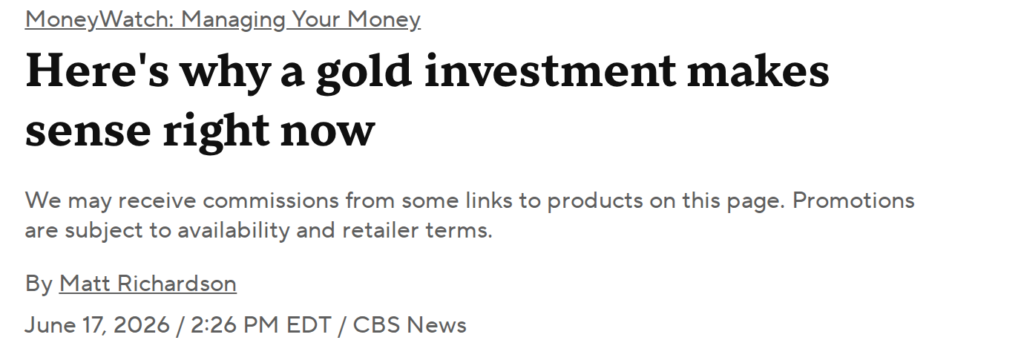
CBS News, June 17, 2026.
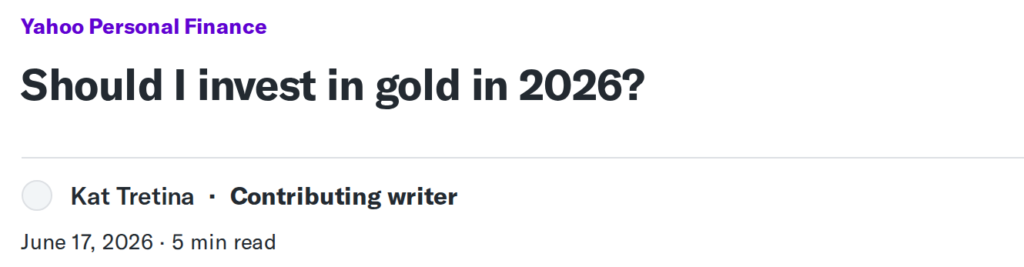
Yahoo Finance, June 17, 2026.
In each case, the advice came after markets had already priced the news.
Earlier cycles with the same pattern
The same sequence has played out before. In 1980, gold peaked at $850 an ounce on January 21 and fell to about $481 by March. Consumer inflation kept rising the whole time and peaked at 14.8% that March. Gold had already lost more than 40% by the month inflation topped out.
In 2022, gold climbed above $2,000 in early March. Inflation peaked at 9.1% in June, the highest reading since 1981. By late September, with the Fed raising rates aggressively, gold had fallen more than 20% from its March high.
The pattern reaches beyond gold. Treasury Inflation-Protected Securities, or TIPS, hedge inflation directly, because their principal value rises with the Consumer Price Index. Investors poured $75 billion into TIPS funds in 2021 as inflation climbed. In 2022, the average TIPS fund lost 9.5%. Rising real yields pushed their prices down faster than the inflation adjustments pushed them up.
What research says about gold as an inflation hedge
Claude Erb and Duke finance professor Campbell Harvey found that gold may hedge inflation over centuries but works poorly as an inflation hedge over horizons of up to 20 years, the span that matters to most investors. They also found that when gold’s inflation-adjusted price sits well above its long-run average, the returns that follow have tended to be below average. In 2025, gold passed its inflation-adjusted record from 1980. Harvey told Duke’s Fuqua School of Business that for investors buying near record prices, expecting gold to hold its real value over the next decade is inconsistent with history.
How to judge an inflation hedge before buying one
Gold can have a place in a portfolio, and inflation deserves a plan. The useful questions come before the purchase.
What does the price already assume? A hedge bought after a large run already reflects the fear that drove the run. Gold’s 2025 rally priced in a great deal of inflation before any showed up in the data.
What return is left from here? The price you pay sets your return. Gold bought at a high inflation-adjusted price has historically earned little in the decade that followed.
What does it earn while you wait? Gold pays no income. A business with pricing power can raise its prices as its costs rise, and its earnings and dividends can grow with inflation over time. Cash and new bonds pay more interest when rates rise. Gold’s return comes entirely from its price.
If a rising inflation number arrives alongside a pitch for a gold IRA, ask what it costs. Some of those pitches run as sponsored content. On January 29, the day after gold’s record, CBS News carried a sponsored piece in its gold IRA section titled “Gold, inflation and Social Security: Protecting your purchasing power in 2026.” Gold has since fallen more than 20%. Physical metal in a retirement account needs a specialized custodian and an approved depository. Yahoo Finance reports that upkeep often runs a few hundred dollars a year for custody and storage, plus a setup fee and a dealer markup on the metal. Ask for every fee in writing, and ask what the dealer will pay when you sell.
Planning for inflation before the headline
Inflation protection works best as part of a plan made in advance. Magnifina invests through original research, and we build each portfolio around the client’s situation. Comprehensive financial planning shows which of your expenses rise with prices and how long your money needs to last, so the portfolio can account for inflation long before a headline does. Individual stocks are one option where they fit, chosen through our research on business quality and pricing power.
To see whether we’re a good fit, start here. It takes four questions and about a minute.