Short- and long-term interest rates are diverging
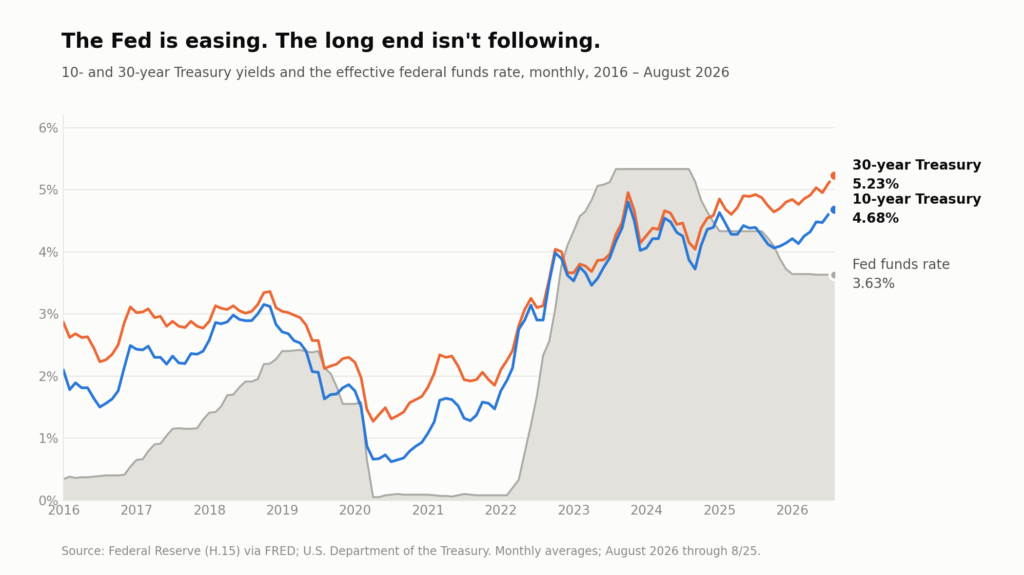
Long-term interest rates are rising, while short-term rates remain stable. This is an unusual situation since interest rates usually move together in concert. The Fed sets the overnight rate at which banks lend to each other. Every other rate is set by investors deciding what they need to be paid to lend money for that timeframe. The theoretical “perfect” rate is the average of the overnight rate for the longer timeframe. In practice, investors add an uncertainty premium to their expectations.
That premium is what has changed. A year ago, a three-month Treasury bill and a ten-year Treasury note paid the same rate, about 4.2%. Investors were asking nothing extra to commit their money for a decade rather than a season. Today the bill pays about 3.9% and the ten-year about 4.6%. The thirty-year has moved further still, from roughly 4.9% to just over 5%, its highest monthly average since 2007. The short end came down because the Fed cut three times between September and December of last year and has held steady ever since. The long end rose on its own. The gap between the shortest and longest Treasuries has roughly doubled over the past year, from about seven-tenths of a percentage point to well over a full point.
A widening premium is the market expressing less confidence about the distant future. It is not an expectation that the Fed will reverse course. For a household, that cuts both ways. Borrowing tied to long-term rates has not gotten cheaper. The average thirty-year mortgage sat near 6.7% in late August. This is slightly higher than a year earlier, despite three Fed rate cuts in between. But a bond investor sits on the other side of that trade, and longer bonds now pay meaningfully more than cash. Patience in the bond portion of a portfolio is finally being compensated.

Market Commentary: 2026 Q3
Chief Investment Officer
Table of Contents
Share
Short- and long-term interest rates are diverging
Long-term interest rates are rising, while short-term rates remain stable. This is an unusual situation since interest rates usually move together in concert. The Fed sets the overnight rate at which banks lend to each other. Every other rate is set by investors deciding what they need to be paid to lend money for that timeframe. The theoretical “perfect” rate is the average of the overnight rate for the longer timeframe. In practice, investors add an uncertainty premium to their expectations.
That premium is what has changed. A year ago, a three-month Treasury bill and a ten-year Treasury note paid the same rate, about 4.2%. Investors were asking nothing extra to commit their money for a decade rather than a season. Today the bill pays about 3.9% and the ten-year about 4.6%. The thirty-year has moved further still, from roughly 4.9% to just over 5%, its highest monthly average since 2007. The short end came down because the Fed cut three times between September and December of last year and has held steady ever since. The long end rose on its own. The gap between the shortest and longest Treasuries has roughly doubled over the past year, from about seven-tenths of a percentage point to well over a full point.
A widening premium is the market expressing less confidence about the distant future. It is not an expectation that the Fed will reverse course. For a household, that cuts both ways. Borrowing tied to long-term rates has not gotten cheaper. The average thirty-year mortgage sat near 6.7% in late August. This is slightly higher than a year earlier, despite three Fed rate cuts in between. But a bond investor sits on the other side of that trade, and longer bonds now pay meaningfully more than cash. Patience in the bond portion of a portfolio is finally being compensated.
Get insights delivered to your inbox and never miss our latest research and key developments. Our monthly roundup includes analysis, updates, and other resources for serious investors.
Related Posts
How gold can fall in a year of high inflation
Golden handcuffs and the real cost of leaving your job
Core Equity Alpha — September 2026 Update
Are we right for you?
Take our brief survey to learn if our advisory services are the best match for your financial goals and situation, and see if we should move forward together.
Ready for the first step?
Schedule a no-cost consultation to discuss your financial goals and explore how we can help you build a personalized investment strategy.